
German Minor Nora Graves’ Thesis combines her passion for computer science and German
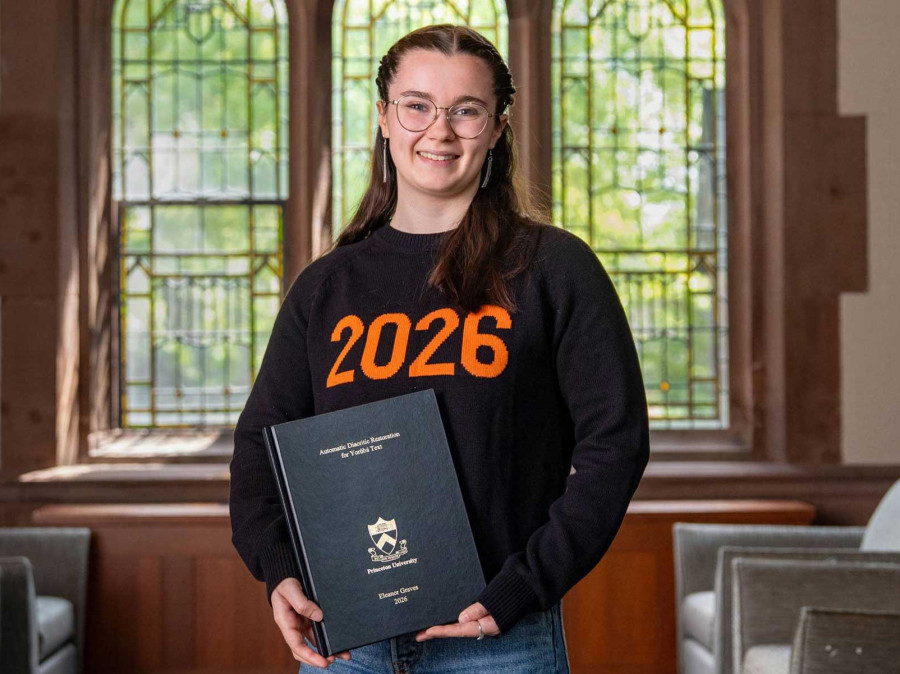
Nora Graves, Class of 2026. Photo by Denise Applewhite, Office of Communications.
Nora Graves has always looked at language as a fascinating puzzle to piece together.
Growing up in Wayne, Pennsylvania, she developed a passion for linguistic problem-solving — first in English, then in German, inspired by her grandmother’s fluency in the language and by a babysitter’s move to Austria.
Graves also worked on coding projects with her father, a computer scientist. At Princeton, she found a way to combine the two. She graduated in May with a major in computer science and minors in linguistics and German. “Language is probably more computational than people realize,” she said.
Her interdisciplinary senior thesis compared two automated approaches to adding accent marks, or diacritics, to text — in this case in the Yorùbá language of Nigeria. She wondered which approach worked better: today’s large language models or statistical methods that have largely fallen out of use.
She was co-advised by Laura Kalin, an associate professor of linguistics and associate director of the Program in Linguistics, and Christiane Fellbaum, a lecturer with the rank of professor in linguistics who helped develop the groundbreaking WordNet, a critical step in the modern AI revolution…