
Käthe Kollwitz, Group Portraiture, and Social Intimacy
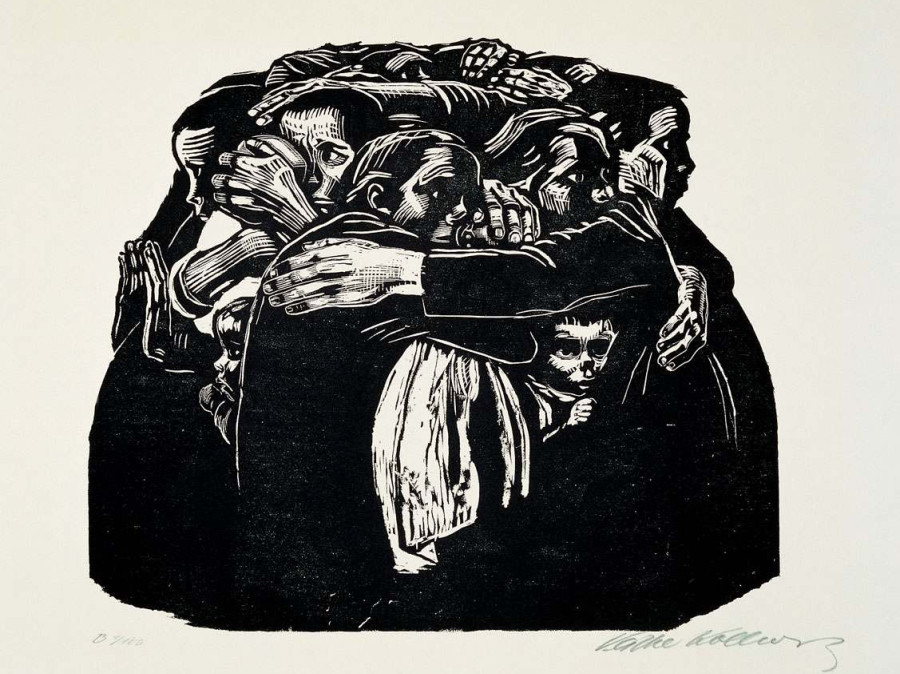
Käthe Kollwitz, The Mothers, 1922–23
This talk uses Aloïs Riegl’s The Group Portraiture of Holland (1902) alongside sections of Georg Simmel’s Sociology (1908) as starting points for examining Kollwitz’s depictions of social groups and gestures of togetherness. How does Kollwitz, commonly thought of as the artist of the masses, negotiate between political visions of union (the socialist community) and small-scale social bonds (such as that between mother and child)? How can one describe the relationship between physical closeness and social intimacy in her work? The talk will consider Kollwitz’s work alongside biographical material such as her diary and correspondence in which she writes, for instance, about her desire to let her dead son flow through her, about her longing to feel completely at one with him, to be completely in him. The talk will trace her various visions of social communion by paying particular attention to her forms of intense togetherness that are underpinned by experiences of extreme loss (as in her representations of the tender proximity between an individual and allegorized death.) The aim is to circumscribe Kollwitz’s and – her period’s – crises of the social.