
Peter Weiss’ The Aesthetics of Resistance at Fifty
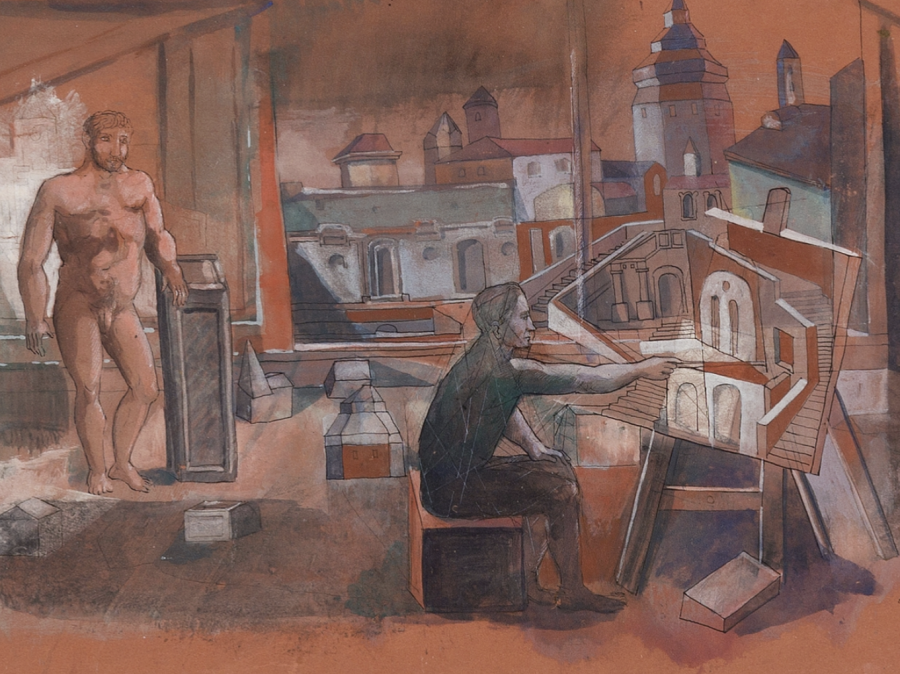
Peter Weiss, Konstnären i ateljén (The Artist in the Studio), 1946 (detail)
This conference takes Peter Weiss’ monumental three volume novel, The Aesthetics of Resistance (1975–81), as a point of departure for examining the larger ethical and political questions the book raises: in what ways is the engagement with art, literature, and other forms of humanistic inquiry constitutive of human community? What forms of solidarity can the appeal to such traditions sustain, especially in moments of crisis or catastrophe, when the urgency of the moment threatens to subsume all other concerns? And, perhaps most importantly: can a canonized cultural heritage be appropriated by the claims and perspectives of those who had previously been excluded from normative appeals to “culture”?
The Aesthetics of Resistance remains one of the twentieth century’s most ambitious attempts to articulate the relation between politics and aesthetics within a revolutionary tradition. While telling the stories of organizers against fascism during the Nazizeit, the novel foregrounds the engagement with art as a legitimate and necessary form of political work. Here, in contrast to elitists’ conceptions of art and aesthetics, proletarian autodidacticism is represented as a dialogical process of defending and developing perceptual abilities against the totalitarian pressures of fascist violence and revolutionary dogmatism. The “slow” and “circuitous” processes of subject-formation take precedence over heroic deeds. In this alternative Bildungsroman, the struggle against fascism becomes reflexive and transformative only through the inquiry into art and the unconscious.
At the same time, The Aesthetics of Resistance represents political violence as an assault not only on bodies, but on perception itself, one that extends from the Holocaust and Vietnam to contemporary acts of systematic and genocidal violence. Placing such experiences in relation to one another, Weiss’s work opens onto a wide horizon of political and aesthetic expressions of humanity and resistance, from the anti-apartheid “cultural work” of the Medu Art Ensemble to the poetry and political writings Walid Daqqa, written during his thirty-eight years of imprisonment in Israel. In navigating the tension between the necessity of solidarity and the risks of its unconditional proclamation, the novel insists that perception, study, and aesthetic practice themselves constitute forms of political labor that are never finished and must remain subject to ongoing critical evaluation.
The keynote speakers will be Professor Julia Hell (Michigan) and Professor Jackie Wang (Brown).